How to Select a Jaw Crusher Motor
A jaw crusher motor is more than a kW figure in a specification table. It must be selected as part of a system that includes crusher inertia, flywheels, the belt drive and the site’s starting conditions. A mismatched motor or starter can cause repeated trips, overheating, belt slip and unstable production.
The safest rule is straightforward: retain the approved power and rated speed for the crusher model, then select a motor, starter and protection system that suit the local electrical supply and operating environment. This guide applies that approach to the Tanker PE jaw crusher range.
How does the motor drive a jaw crusher?
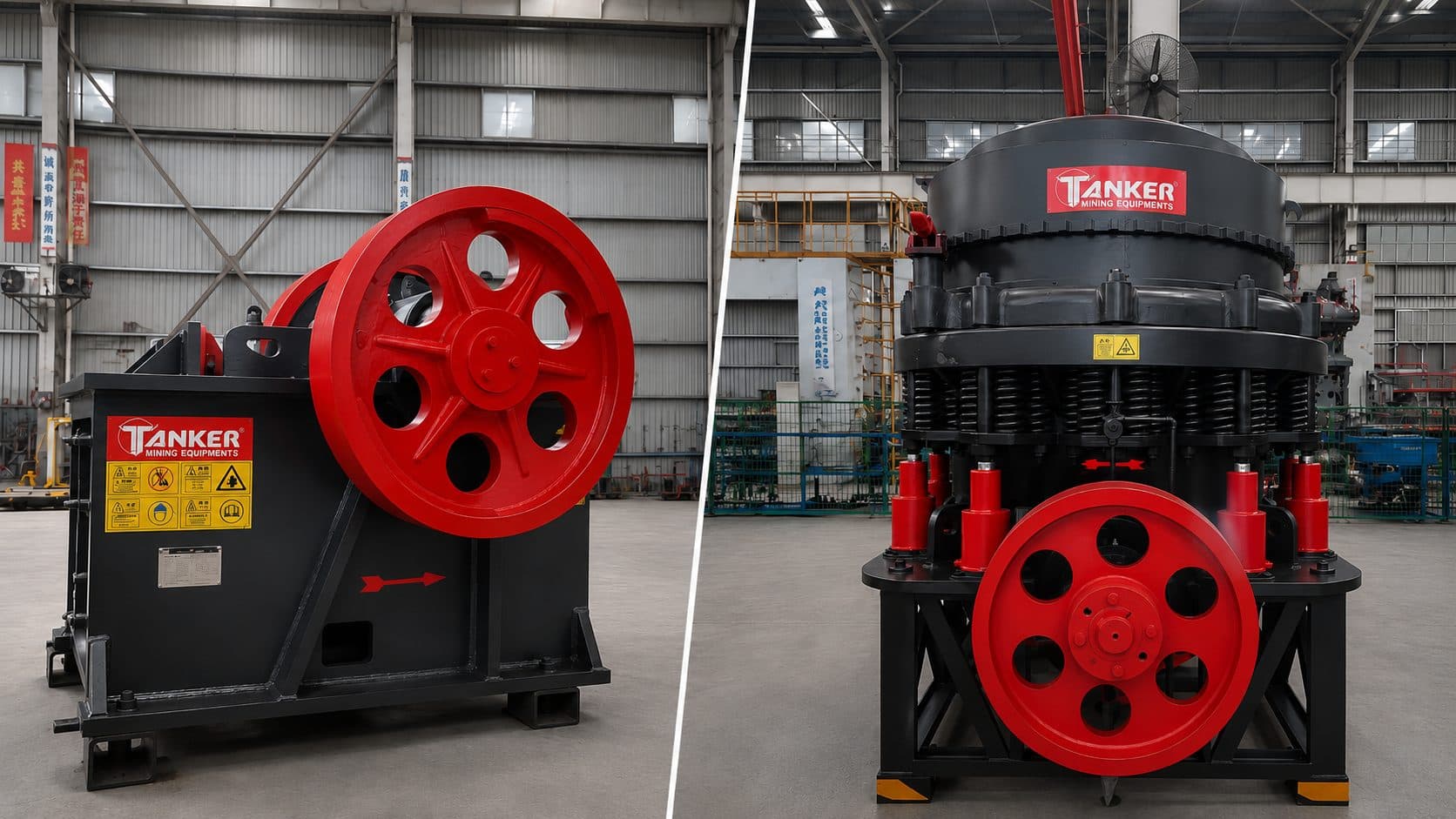
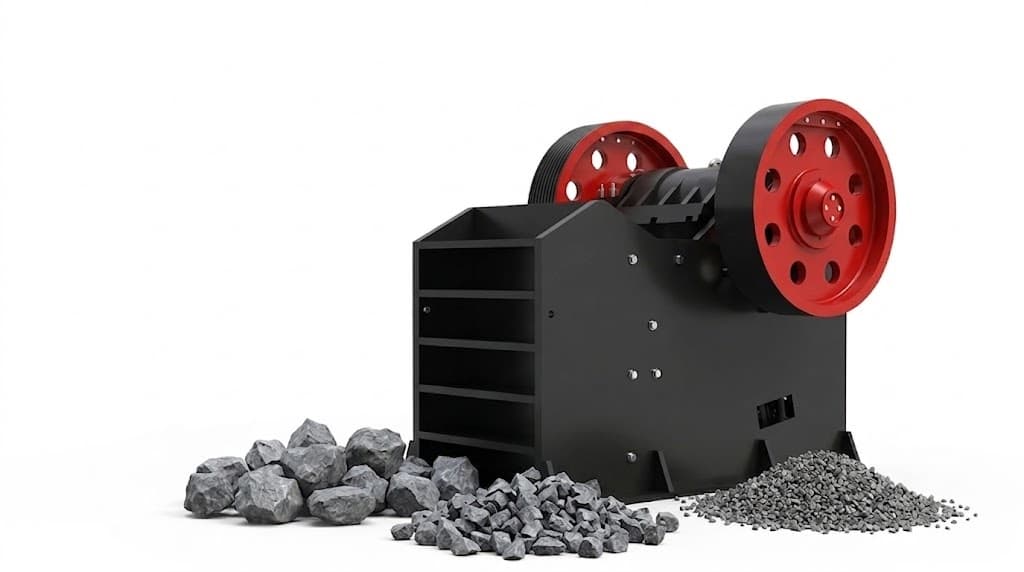
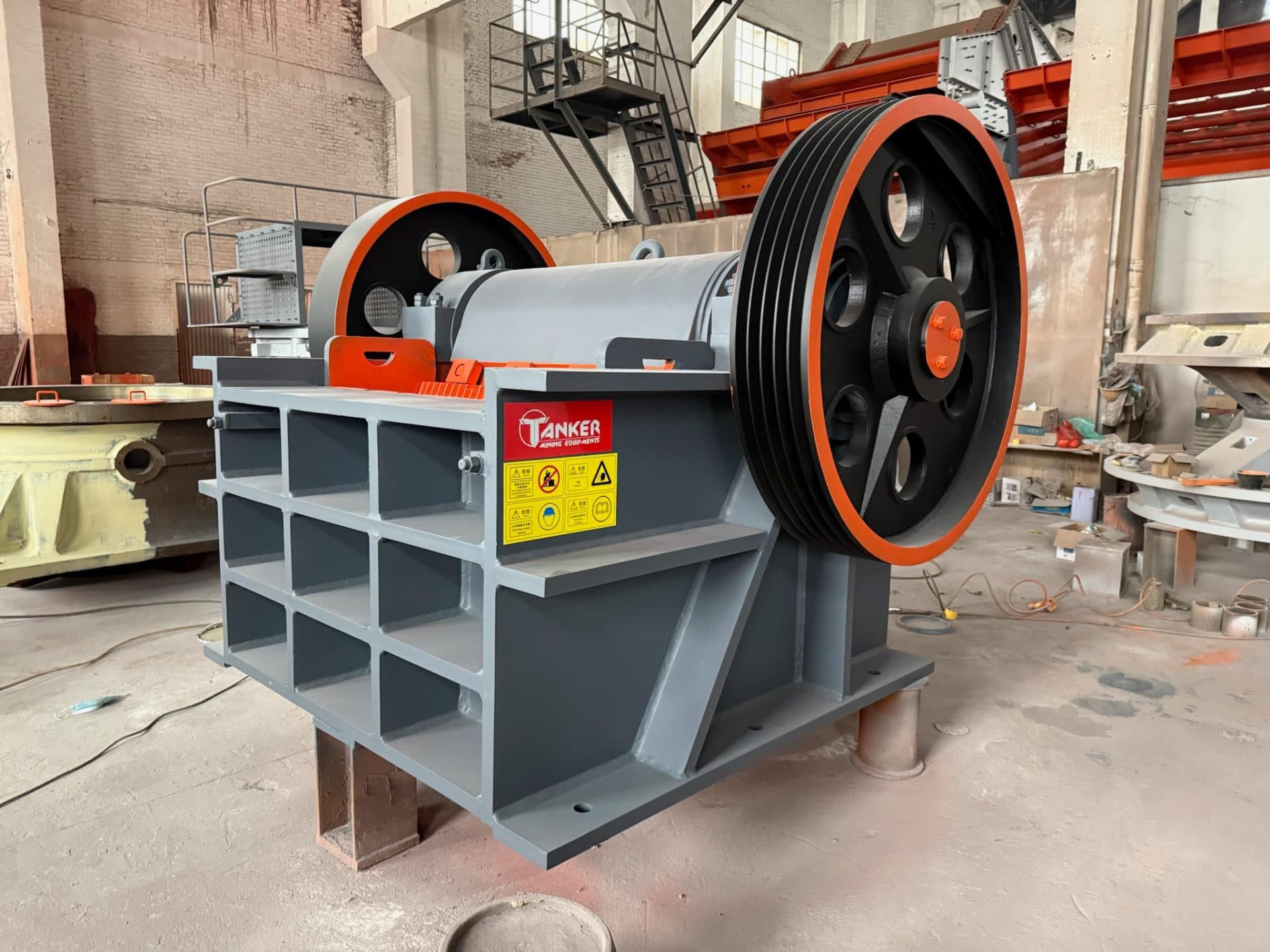
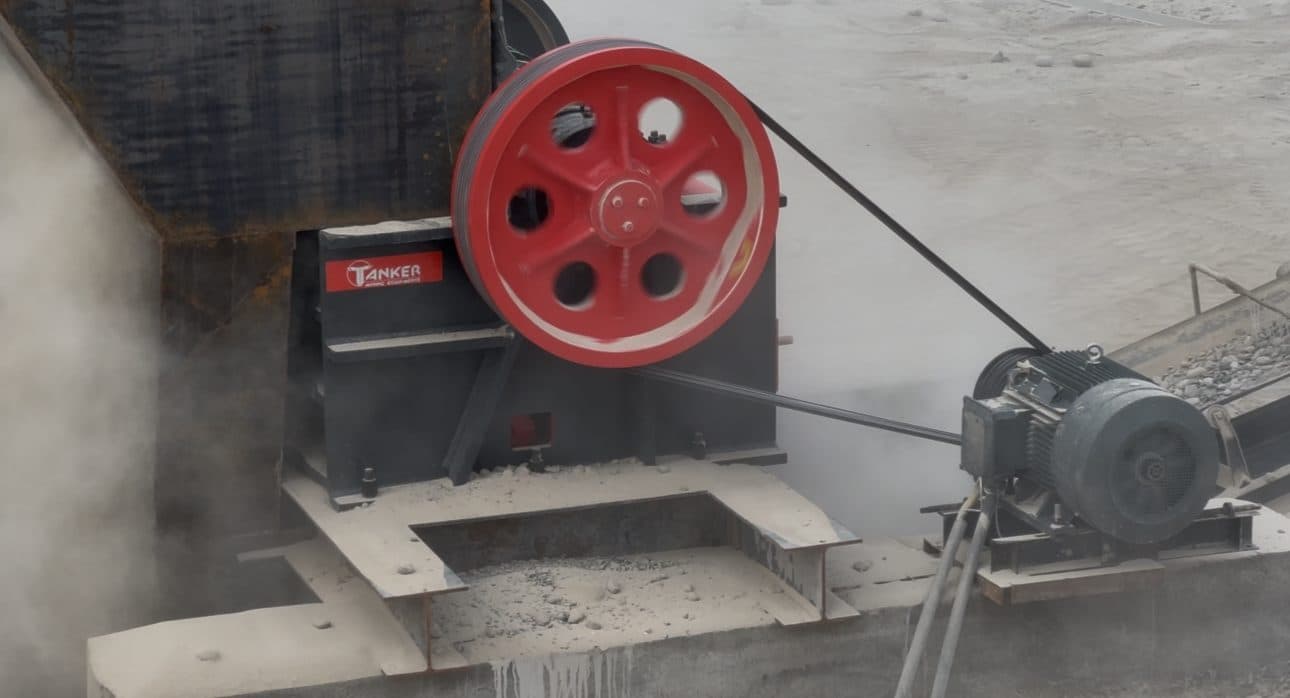
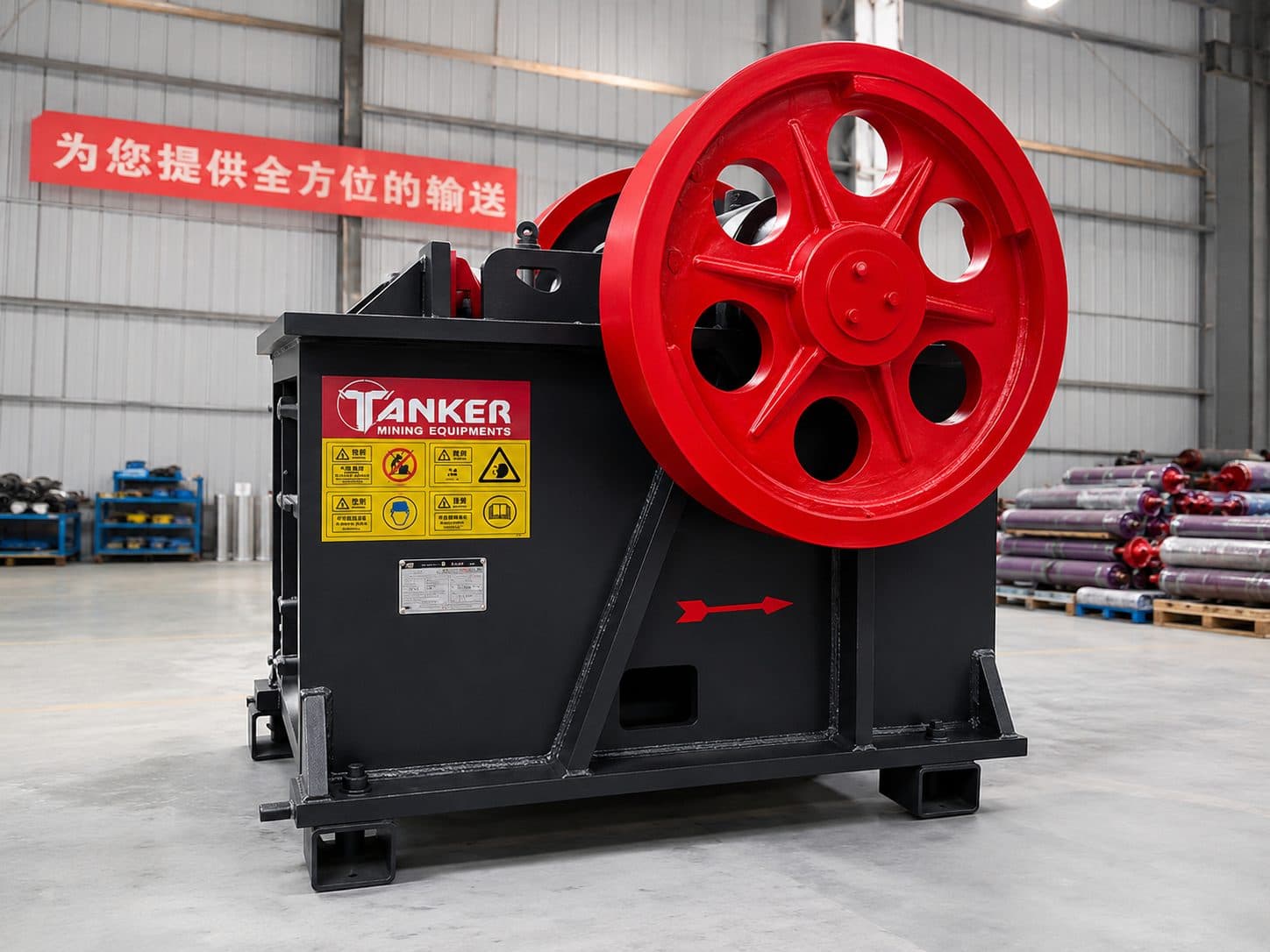
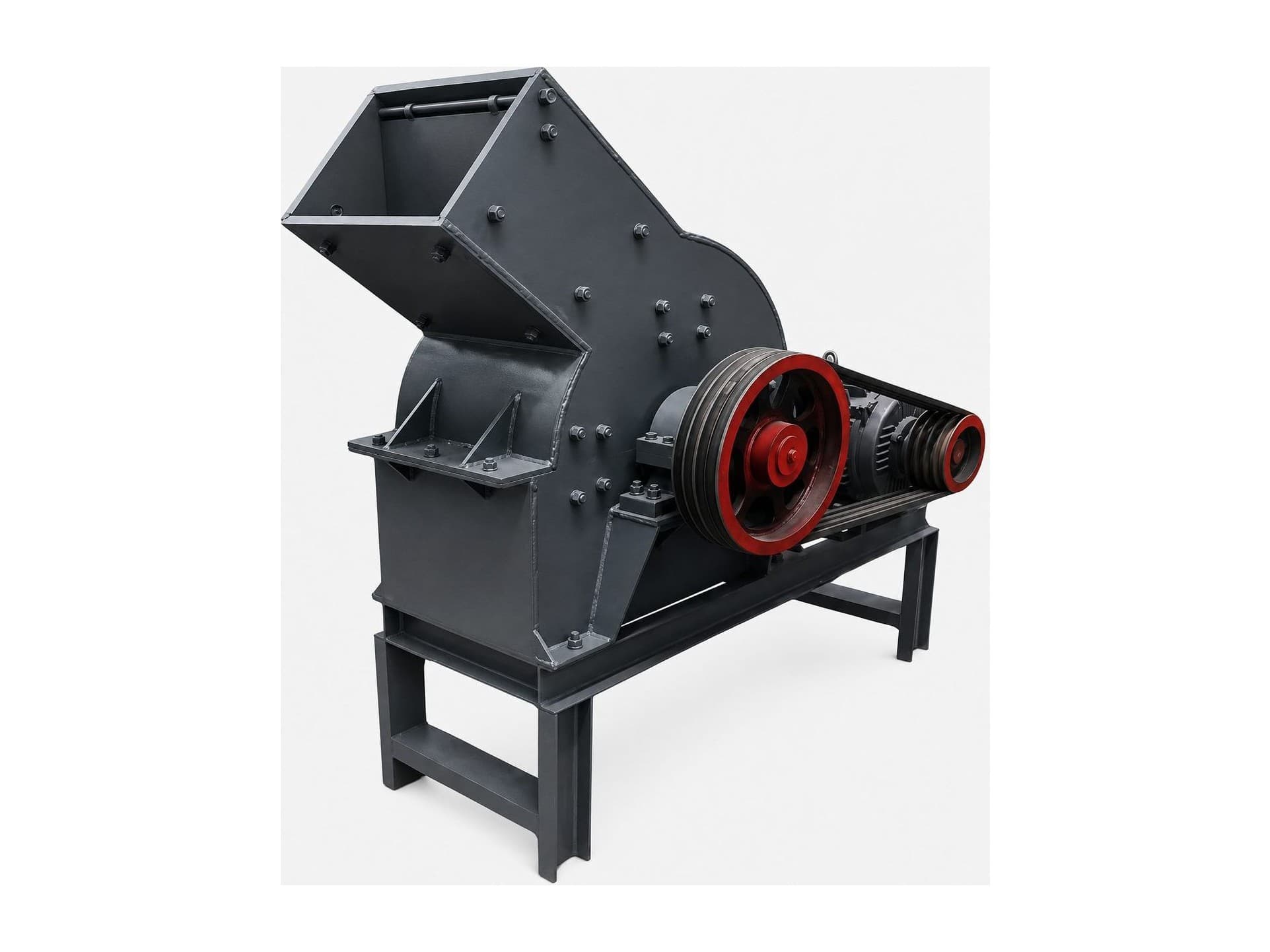
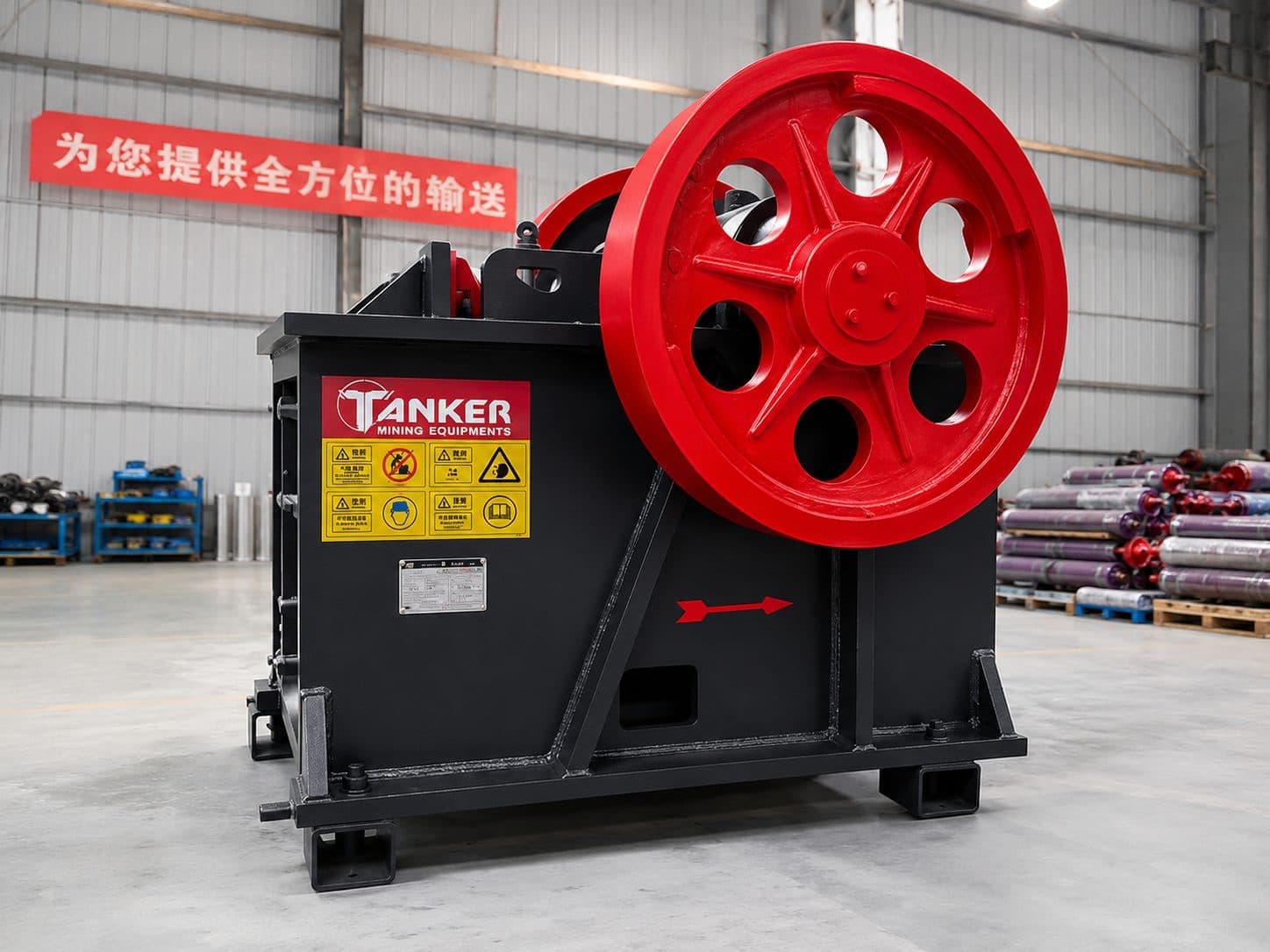
A three-phase induction motor normally drives a large pulley-flywheel through V-belts. The flywheel stores energy, while the eccentric shaft creates the reciprocating motion of the moving jaw. Motor power therefore cannot be separated from rated speed, pole count, pulley ratio, starting torque and starting current. For a closer look at the mechanics, see our guide to how a jaw crusher works.
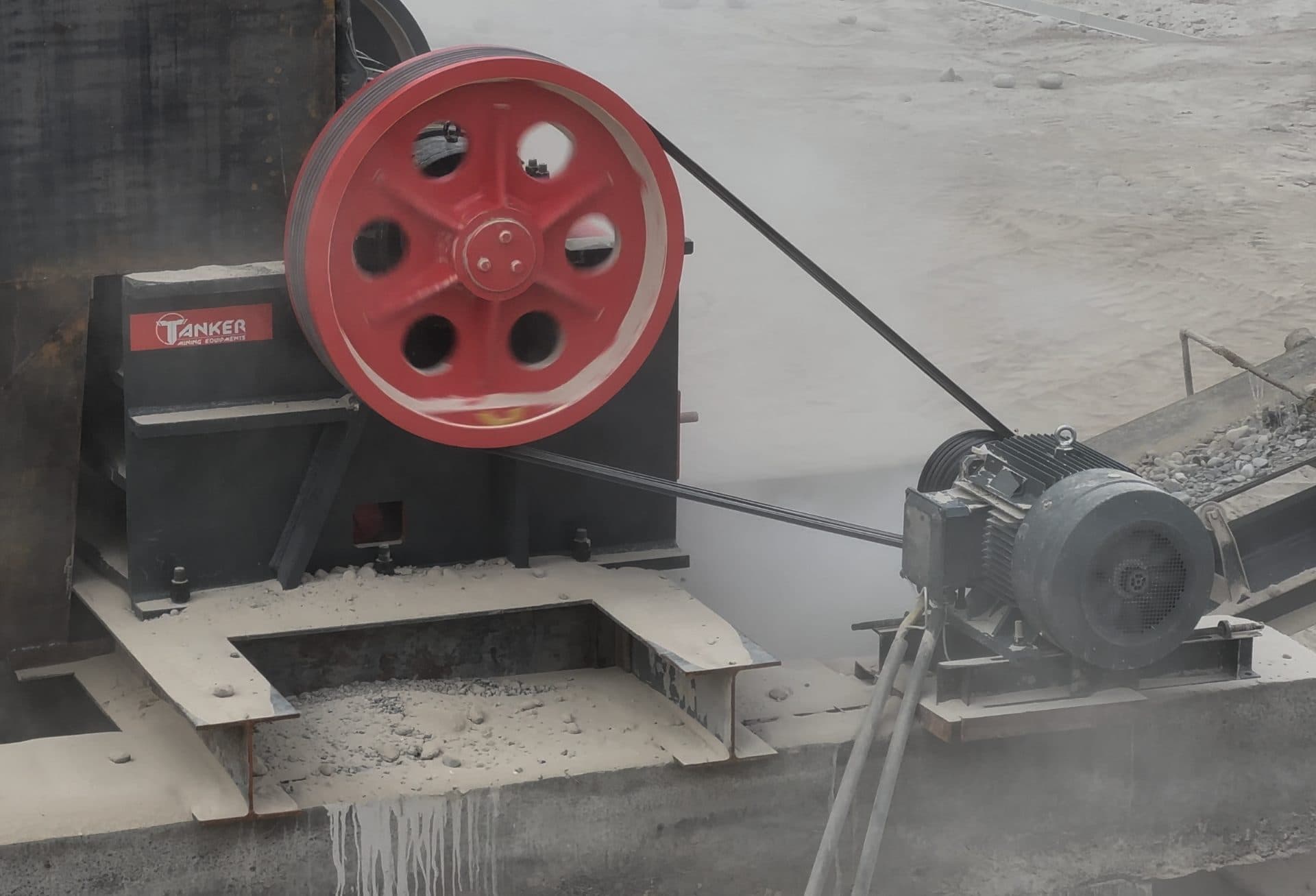
The motor, belt drive and flywheel form a matched system; changing the kW rating alone is not a complete engineering solution.
What does correct motor selection include?
Rated power: the kW approved by the manufacturer for the selected crusher model.
Speed and pole count: must produce the design eccentric-shaft speed through the specified pulley ratio.
Voltage and frequency: must match the site supply, including whether it is a 50 or 60 Hz system.
Starting torque and current: must accelerate the large flywheels and crusher inertia without an excessive voltage dip.
Duty and environment: dust, ambient temperature, altitude, moisture and starts per hour affect enclosure, cooling and insulation requirements.
Protection: short-circuit, overload, phase-loss or imbalance and overtemperature settings must match the motor and application.
Tanker PE models: motor power and operating range
Model | Max. feed | Discharge range | Capacity | Motor |
|---|---|---|---|---|
PE250×400 | 210 mm | 25–60 mm | 5–20 t/h | 15 kW |
PE400×600 | 350 mm | 40–90 mm | 15–60 t/h | 30 kW |
PE500×750 | 425 mm | 50–100 mm | 40–130 t/h | 45 kW |
PE600×900 | 500 mm | 60–125 mm | 90–180 t/h | 55 kW |
PE750×1060 | 630 mm | 60–150 mm | 110–380 t/h | 110 kW |
PE900×1200 | 750 mm | 95–165 mm | 220–450 t/h | 132 kW |
PE1000×1200 | 850 mm | 200–300 mm | 280–560 t/h | 160 kW |
PE1200×1500 | 1020 mm | 150–300 mm | 400–800 t/h | 220 kW |
PE1500×1800 | 1200 mm | 210–360 mm | 520–1100 t/h | 280 kW |
These are nominal product ratings. The final configuration must be confirmed against the order specification, supply system, material and site conditions.
Will a larger motor increase crusher capacity?
Not automatically. Capacity is set by the feed opening and chamber geometry, eccentric-shaft speed, discharge setting, material strength and moisture, and the consistency of feeding. A larger motor does not strengthen the chamber or bearings, and it does not change the permitted shaft speed. In fact, an incorrectly uprated motor or protection setting can leave mechanical components under-protected during a blockage.
Starting method: DOL, star-delta, soft starter or VFD?
Method | Main benefit | Important limitation |
|---|---|---|
Direct-on-line (DOL) | Simple and provides full starting torque | High starting current; the transformer and network must tolerate it |
Star-delta | Reduces starting current | Also reduces starting torque and may not accelerate a high-inertia load |
Soft starter | Limits current and mechanical shock | Ramp time and current limit must suit the crusher’s inertia |
Variable-frequency drive (VFD) | Controlled starting and, when needed, speed or torque control | Operate only within the Tanker-approved speed range; check motor cooling, insulation and protection |
A “VFD motor” is not a separate crusher-motor category. In practice it means an inverter-duty or otherwise suitable motor supplied by a correctly selected and programmed VFD. Changing jaw-crusher speed without engineering approval alters material movement in the chamber, bearing loads and capacity. Use a VFD only when the project needs control and the permitted speed range is known.
Eight site details to confirm before selection
Crusher model and serial number, or the quotation specification.
Supply voltage, 50/60 Hz frequency and available transformer or generator capacity.
Permitted starting current and voltage dip.
Site altitude and minimum and maximum ambient temperature.
Dust, rain and moisture conditions, plus enclosure and cooling requirements.
Starts per hour and expected operating hours per shift.
Cable length and cross-section, protective devices and earthing system.
Starter type, automation and interlocks with the feeder.
What can operating current tell the operator?
Tracking current in all three phases during steady operation is useful. A sustained increase can indicate excessive or uneven feed, an overly tight discharge setting, harder material, belt trouble or additional bearing resistance. Low current combined with low output may point to underfeeding or belt slip. Current alone is not a diagnosis, however; compare it with voltage, phase balance, bearing temperature, vibration and actual tonnage.
Common symptoms and first checks
Symptom | Possible causes | First checks |
|---|---|---|
Trips during starting | Material in the chamber, low voltage, incorrect starter settings, mechanical drag | Check the chamber, supply voltage, free movement and the protection event log |
Motor runs hot | Overload, blocked cooling, voltage/current imbalance, frequent starts | Compare phase currents and voltages; inspect ventilation, ambient temperature and load profile |
High current after acceleration | Oversize or hard feed, feed surges, tight CSS, bearing resistance | Check feed, CSS, material and mechanical temperatures |
Vibration near the motor | Loose mounting, pulley imbalance, belt misalignment or wear | Inspect mounting, alignment and belt condition |
Unequal phase currents | Supply, cable, terminal or winding problem | Have a qualified electrician check voltage and connections |
A practical maintenance schedule
Every shift: observe unusual noise, smell and vibration; trend current and temperature; confirm guards are secure.
Weekly: remove dust from motor cooling paths and inspect mounting bolts, belt tension and pulley alignment.
At planned shutdowns: a qualified electrician should inspect terminals, earthing and protection and trend insulation resistance; service bearings according to the motor manufacturer’s manual.
Before any work: isolate and lock out every energy source and verify a zero-energy state. Never run the crusher with a drive guard removed.
What should you send Tanker for selection or troubleshooting?
Provide the crusher model, a clear photo of the motor nameplate, supply voltage and frequency, site altitude and temperature, material type, target tonnage, starter and protection arrangement, and—if there is a fault—current and temperature records. Tanker engineers can then review the motor, drive, starter and feeder control as one system.
Frequently asked questions
What motor power does a PE600×900 need?
The current Tanker PE table lists a 55 kW nominal motor for the PE600×900. Voltage, frequency, pole count, mounting and starter type must still be confirmed in the order specification.
Can I install a larger motor?
Only after an engineering check and approval from Tanker. Otherwise, the coordinated protection of the drive and crusher components may be compromised.
Does a jaw crusher require a VFD?
No. Many installations use a properly selected DOL, star-delta or soft-starter arrangement. A VFD is justified when the project genuinely needs controlled speed or torque.
Why does the motor trip during starting?
Possible causes include material left in the chamber, low voltage, insufficient starting torque, an incorrect protection setting or mechanical binding. Increasing the trip setting before finding the cause is unsafe.
Can the crusher be started with material in the chamber?
Normal practice is to start the crusher empty and begin feeding after it reaches rated speed, unless the installation’s specific operating instructions state otherwise.
Conclusion
Good jaw-crusher motor selection goes beyond “how many kilowatts?” Power, speed, supply, starting torque, starter, environment and protection must work together. A properly coordinated system starts reliably, protects the mechanical components and reduces unplanned downtime.