Wheel vs Spiral Sand Washer: How to Choose the Right System
Wheel and spiral sand washers are often presented as two interchangeable machines with a simple list of advantages and disadvantages. In a real plant, the decision is more technical. The washer must match the feed grading, maximum particle size, clay condition, required finished-sand specification, water circuit and downstream dewatering equipment.
The useful question is therefore not “Which sand washer is better?” but “Which washing and classification action does this material require?”
Quick answer
A wheel sand washer is usually the practical choice for sand-sized feed with light to moderate surface contamination when a compact, mechanically simple machine with integrated lifting and preliminary drainage is required.
A spiral sand washer is usually more suitable when the feed is coarser or more variable, greater agitation is needed, or the process requires stronger control of settling, overflow and partial classification.
Neither choice should be confirmed from machine type alone. For sticky plastic clay, valuable ultrafines or strict moisture limits, the correct solution may also require a log washer or attrition scrubber, hydrocyclone, fine-sand recovery unit, dewatering screen and water-recycling system.
How does a wheel sand washer work?
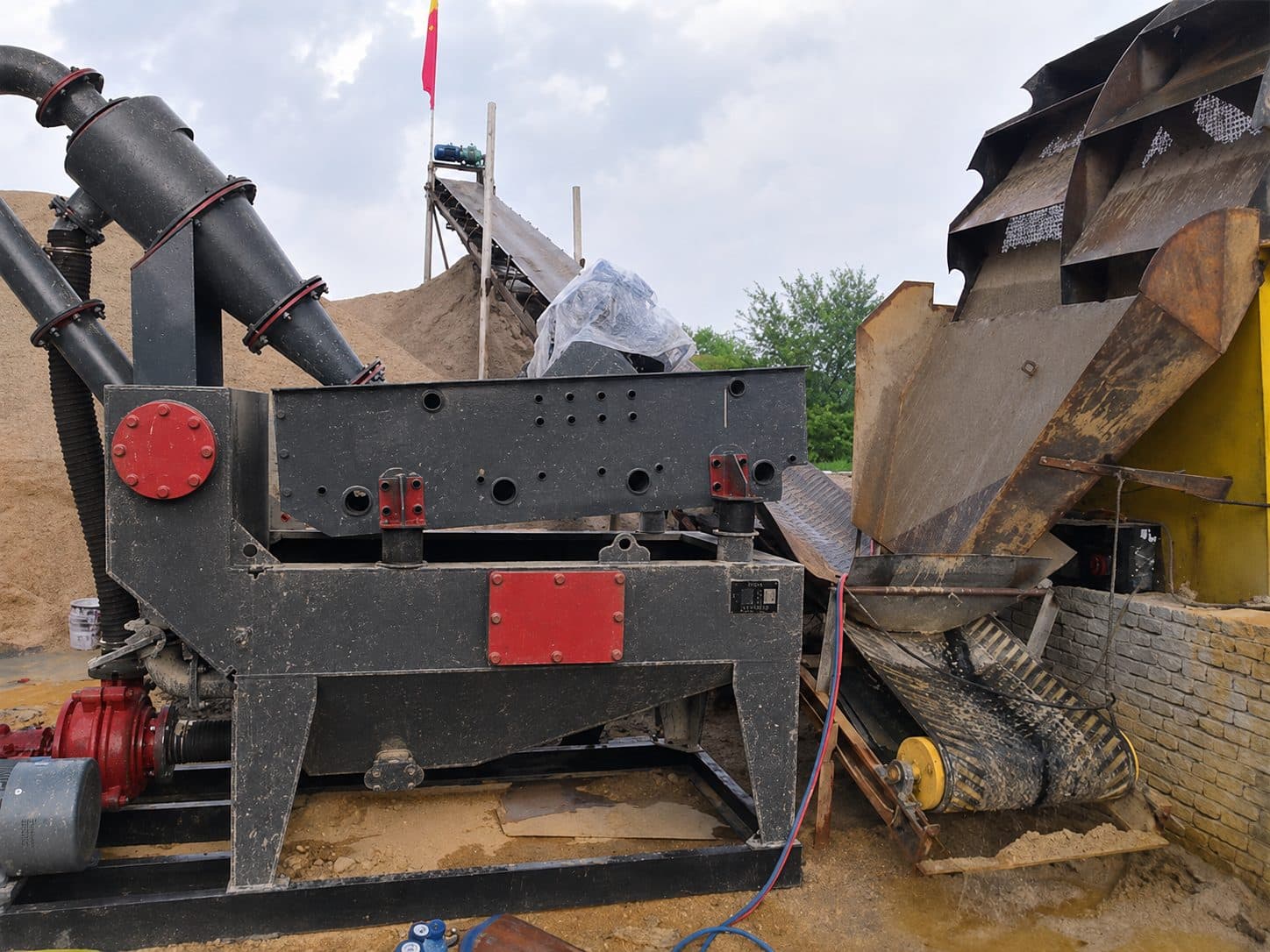
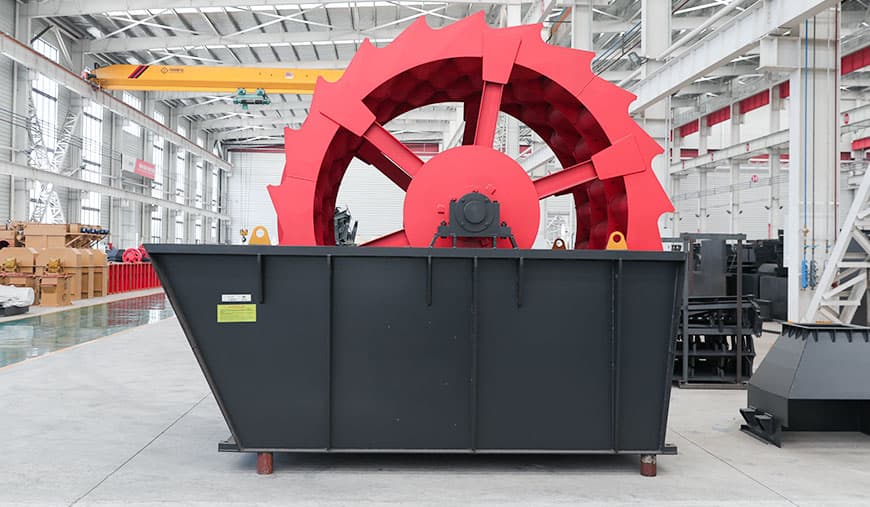
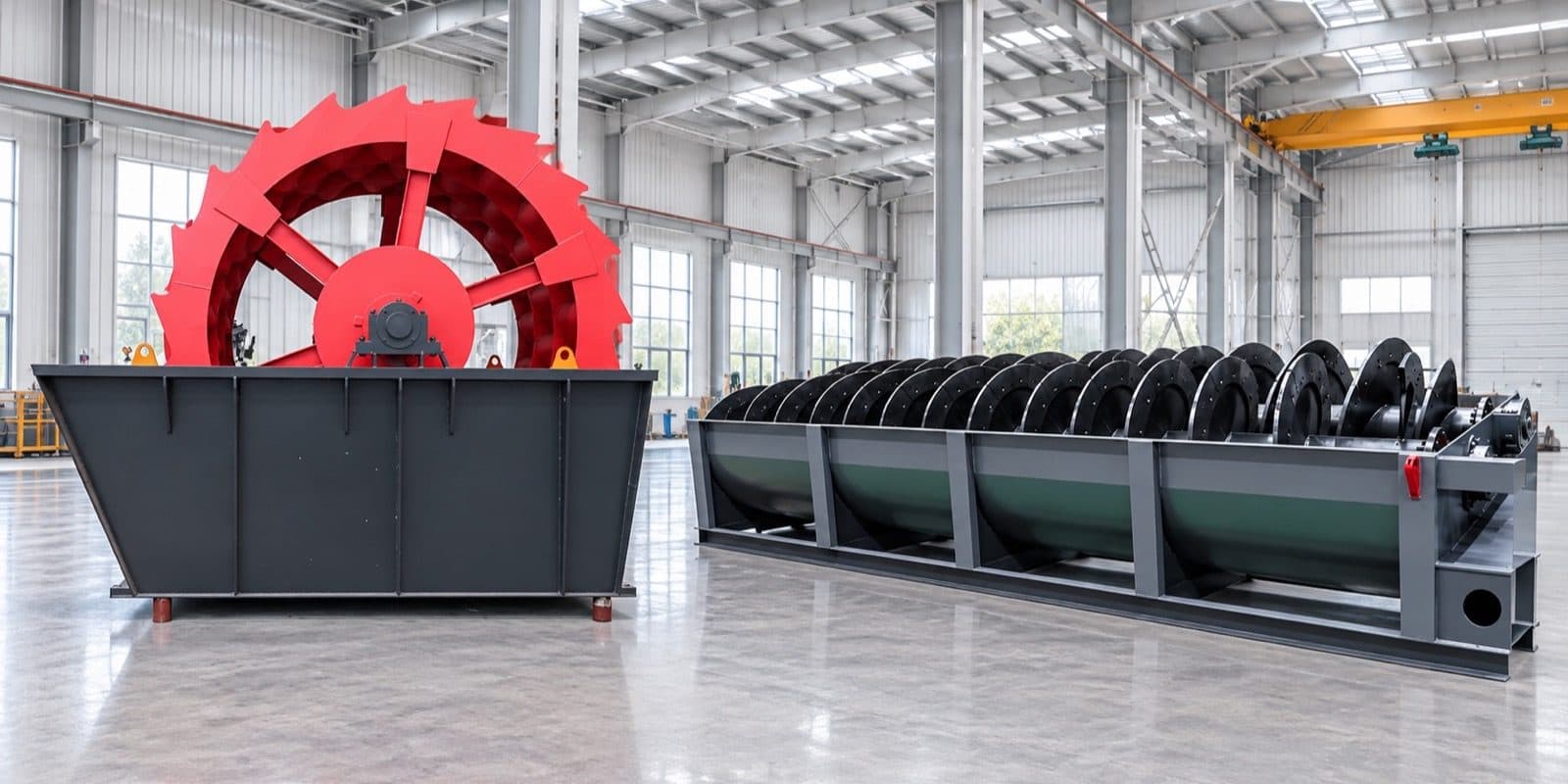
A wheel washer uses a slow-turning impeller or bucket wheel that rotates partly inside a water-filled tank. Sand is agitated in the tank, while lighter suspended contaminants leave with the overflow. The rotating wheel collects the settled material, lifts it above the water level and allows part of the free water to drain before discharge.
This arrangement combines washing, material lifting and preliminary dewatering in a relatively compact machine. The current TANKER XSD range is intended for feed up to 10 mm, with model-dependent rated capacities of 20–300 t/h.
The wheel does not automatically guarantee a particular cleanliness or fine-sand recovery rate. Performance still depends on feed gradation, the amount and type of contamination, water flow, tank level, wheel speed and the screen or perforated-panel opening.
How does a spiral sand washer work?
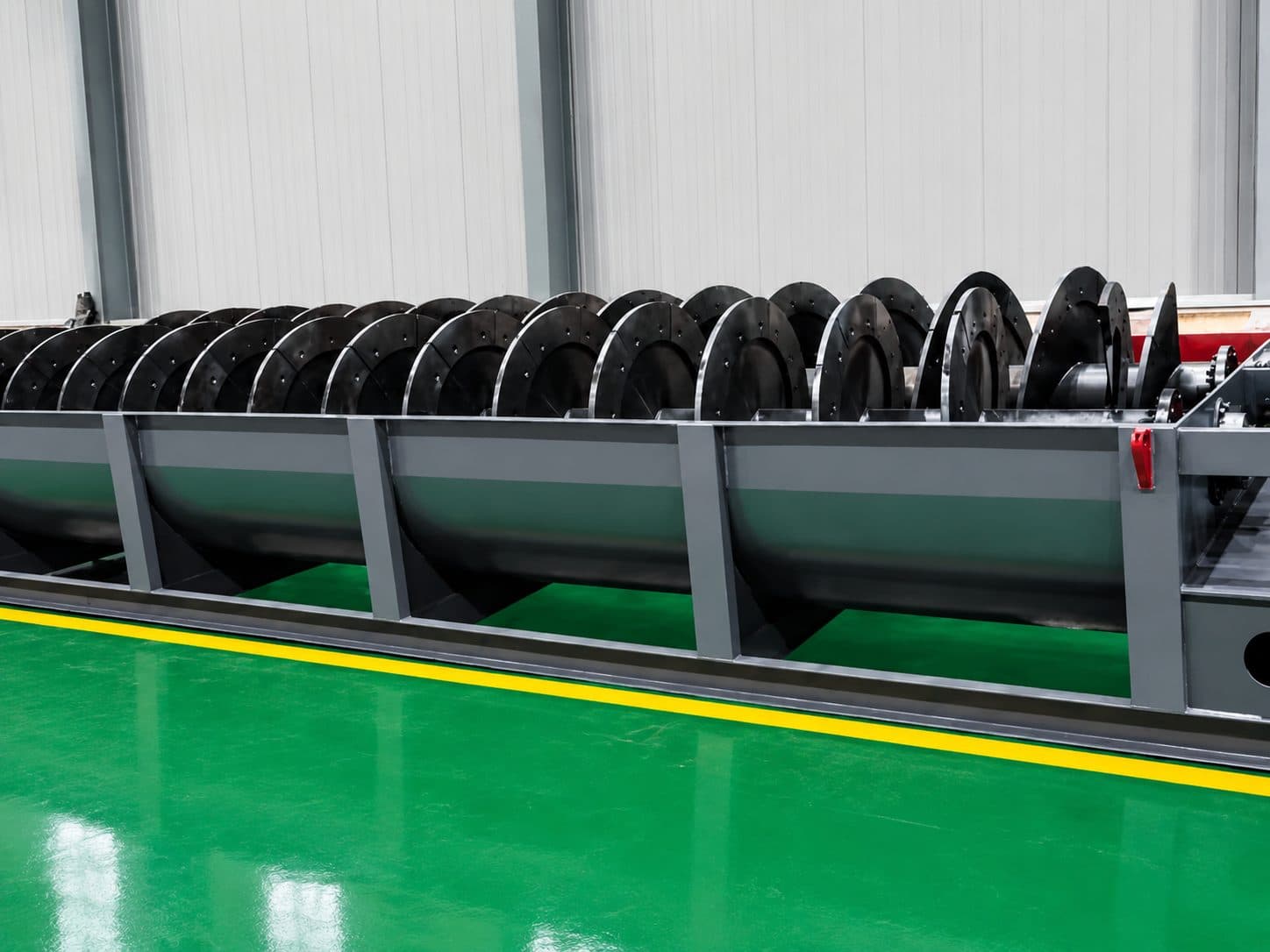
A spiral washer uses one or two rotating spiral shafts inside an inclined trough. The spirals agitate the feed, move the settled solids toward the discharge end and provide particle-to-particle rubbing. Water and suspended light material leave through the overflow, while the heavier product is conveyed upward and discharged.
The pool depth, overflow-weir setting, spiral speed and feed conditions influence which particles settle into the product and which report to the overflow. This gives the spiral washer a useful washing and partial-classification function, but an unstable pool or excessive turbulence can also send saleable fine particles into the wastewater.
The current TANKER XL range handles feed from 0–30 mm, with single- and twin-spiral models rated at 40–280 t/h, depending on model and operating conditions.
Wheel vs spiral sand washer: key differences
Selection factor | Wheel sand washer | Spiral sand washer |
|---|---|---|
Main mechanism | Wheel or buckets agitate, collect and lift settled sand | One or two spirals agitate, convey and partially classify material |
TANKER feed range | Up to 10 mm | 0–30 mm |
TANKER rated capacity range | 20–300 t/h | 40–280 t/h |
Washing action | Moderate agitation for conventional sand washing | More sustained agitation and particle movement in an inclined trough |
Clay and silt duty | Suitable for loose dust, silt and light-to-moderate contamination | Better suited to higher contaminant load or material needing longer agitation |
Classification control | Limited; mainly governed by tank and overflow conditions | Stronger influence from the settling pool, overflow weir and spiral operating settings |
Fine-sand retention | Can retain coarse and medium sand well, but results depend on openings and overflow | Adjustable classification is possible, but useful fines can be lost if the pool or overflow is not controlled |
Discharge drainage | The wheel lifts material out of the water and drains part of the free water | The inclined conveying section drains part of the free water during discharge |
Footprint | Usually compact | Usually longer because of the inclined trough |
Maintenance focus | Wheel, perforated panels, bearings, gearbox, tank and drive | Spiral flights or blades, shaft, bearings, gearbox, trough and wear liners |
Typical fit | Manufactured or natural sand with moderate washing duty and limited space | Variable or dirtier feed requiring more agitation and partial classification |
The capacity figures above describe the current TANKER product families, not a direct winner. A 300 t/h wheel washer is not automatically suitable for a 300 t/h feed, and a spiral washer cannot be selected from throughput alone. Material tests and a complete water-and-solids balance remain necessary.
Five points that matter more than the machine name
1. Loose silt is different from bonded clay
Water and gentle agitation can remove loose dust and silt. Clay that is plastic, sticky or strongly bonded to the particle surface needs more energy and retention time. A spiral washer may provide more agitation than a wheel washer, but very difficult clay may require a log washer or attrition scrubber before final washing and classification.
2. Valuable fines are not the same as waste fines
The target is not to remove every small particle. Some fine fraction may be required for the finished sand grading, while material below a specified cut point must be rejected. The required product curve and the percentage passing 75 μm or another project limit should be defined before setting the overflow or choosing a recovery circuit.
3. Water consumption belongs to the whole circuit
It is misleading to declare that one machine always consumes less water. Fresh-water demand depends on feed moisture, clay content, target cleanliness, dilution, overflow settings and how much process water is recovered. A settling tank, clarifier or filter press can have a larger effect on net water consumption than the washer name.
4. Washing and dewatering are separate duties
Both machines remove part of the free water, but neither should automatically be treated as the final dryer. If the stockpile must have lower residual moisture or drain quickly, add a dewatering screen. Its capacity must be checked against the actual solids and water load.
5. Fine-sand loss must be measured, not guessed
Take and sieve samples from the feed, washed product and overflow. If the overflow contains useful sand, a hydrocyclone and dewatering screen or a dedicated fine-sand recovery system may return it to the product. Visual inspection of cloudy water is not enough to calculate saleable-product loss.
When should you choose a wheel sand washer?
Choose a wheel washer when most of the following conditions apply:
The feed is already screened to sand size and remains within the selected model’s limit.
Contamination is mainly loose dust, stone powder, silt or a moderate amount of clay.
The plant needs a compact and mechanically straightforward washing stage.
Integrated lifting and preliminary drainage are useful.
The product specification does not require precise hydraulic classification inside the washer.
Feed grading and flow are reasonably stable.
For these duties, the TANKER XSD wheel sand washer is the first product family to evaluate.
When should you choose a spiral sand washer?
Choose a spiral washer when most of the following conditions apply:
The feed contains particles above the normal wheel-washer limit but remains within the spiral model’s permitted range.
The material needs more sustained agitation or longer residence in the washing zone.
The process must combine washing, conveying and partial classification.
Clay, silt or stone-powder loading is relatively high, but not so difficult that a dedicated scrubber is required.
The site can accommodate the longer inclined trough.
Operators can control pool conditions, water flow, spiral speed and overflow behavior.
For these duties, evaluate the TANKER XL spiral sand washer in single- or twin-spiral configuration.
When one washer is not enough
A complete sand-washing circuit may include:
Wet screen → scrubber, if required → wheel or spiral washer → hydrocyclone or fine-sand recovery unit → dewatering screen → stockpile
Process water may pass through a settling tank, thickener, clarifier or filter press before returning to the plant. The exact arrangement depends on the feed, discharge-water limits and the value of the fine fraction.
Adding more equipment is not automatically better. Each stage should solve a measured problem: inadequate clay removal, uncontrolled grading, excessive fine-sand loss, high product moisture or excessive fresh-water demand.
Information needed before selecting a washer
Provide the following data to the equipment supplier:
Material source: manufactured sand, river sand, quarry fines or mineral feed.
Full particle-size distribution, including the fine fraction.
Maximum lump size and the percentage near that size.
Total clay and silt content, plus whether the clay is loose or bonded.
Required hourly feed rate and operating schedule.
Finished-product grading, cleanliness and moisture limits.
Available fresh water, water quality and planned recycling method.
Site space, elevation difference and discharge arrangement.
Representative samples for washing and settling tests.
Conclusion
A wheel sand washer is a strong choice for compact, conventional washing of screened sand with light to moderate contamination. A spiral sand washer is more appropriate when feed size, agitation and partial-classification requirements are greater.
The final decision should follow the material data—not a generic “winner” table. TANKER can evaluate the feed grading, clay condition, required capacity, finished-sand specification and water circuit to select the washer and any necessary recovery or dewatering equipment as one system.
Frequently asked questions
Which machine removes clay better: wheel or spiral?
A spiral washer generally provides more sustained agitation and is often better for a higher load of loose clay and silt. Strongly bonded or plastic clay may still require a log washer or attrition scrubber. A washing test is more reliable than choosing by machine name.
Does a wheel sand washer always use less water?
No. Net fresh-water demand depends on the complete circuit, including feed moisture, dilution, target cleanliness, overflow settings and water recycling. Compare the designed water balance, not only the washer type.
Which machine loses less fine sand?
Either machine can lose useful fines if openings, pool conditions or overflow are incorrect. Define the required cut point, sample the overflow and add hydrocyclone recovery when the lost fraction has commercial value.
Can washed sand go directly to the stockpile?
It can when the discharged moisture is acceptable and the stockpile has suitable drainage. When lower residual moisture or faster handling is required, install a dewatering screen after the washer.
Can wheel and spiral washers be used in the same plant?
Yes, if each performs a distinct duty, but the combination should solve a verified process need. Many plants need only one washer plus fines recovery and dewatering equipment.
What is the most important selection test?
A representative wet test using the actual feed is the most useful confirmation. It should measure product grading, removed contaminants, fine-sand loss, water demand and discharge moisture at the required throughput.