How Does a Vibrating Screen Work? Principle and Setup
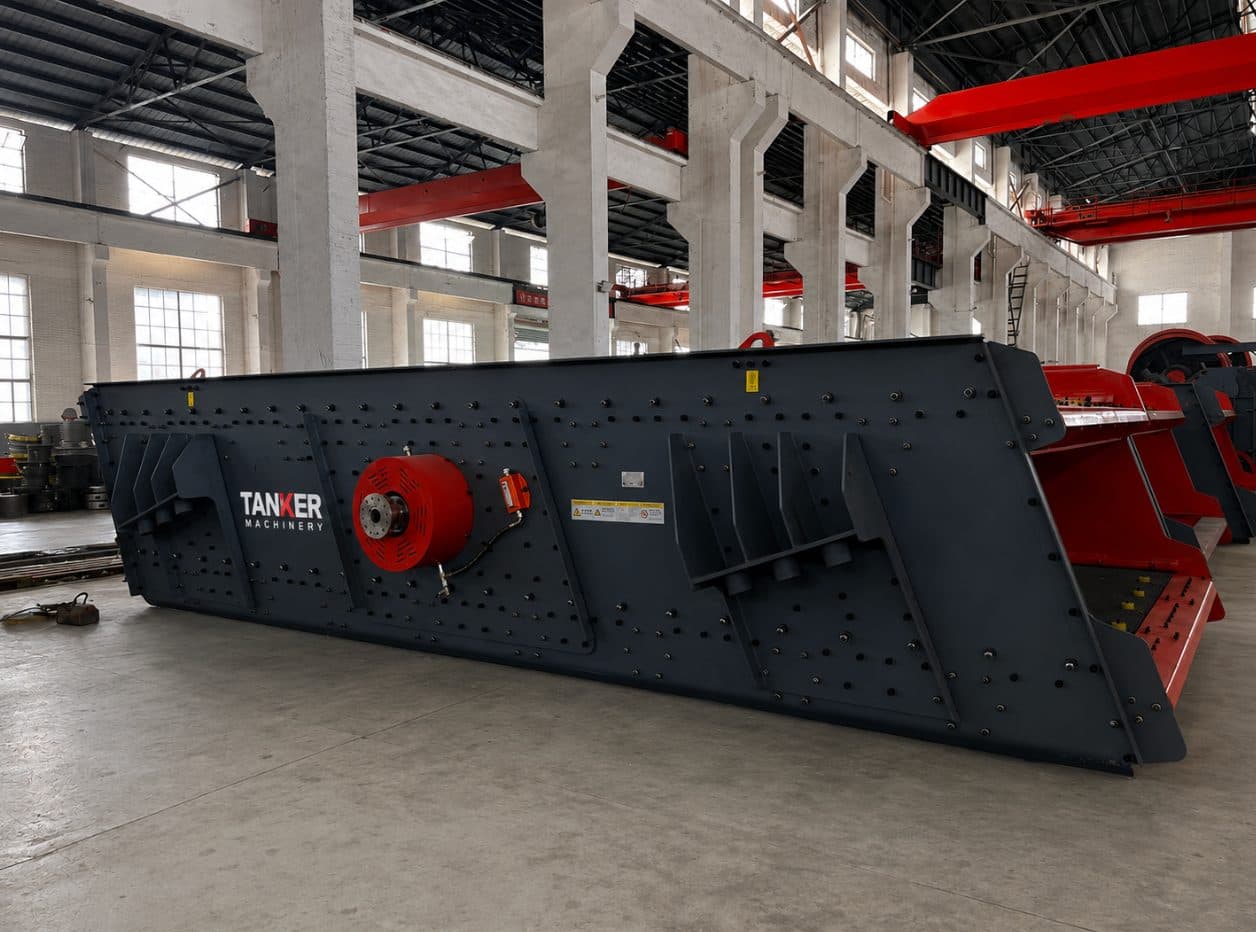
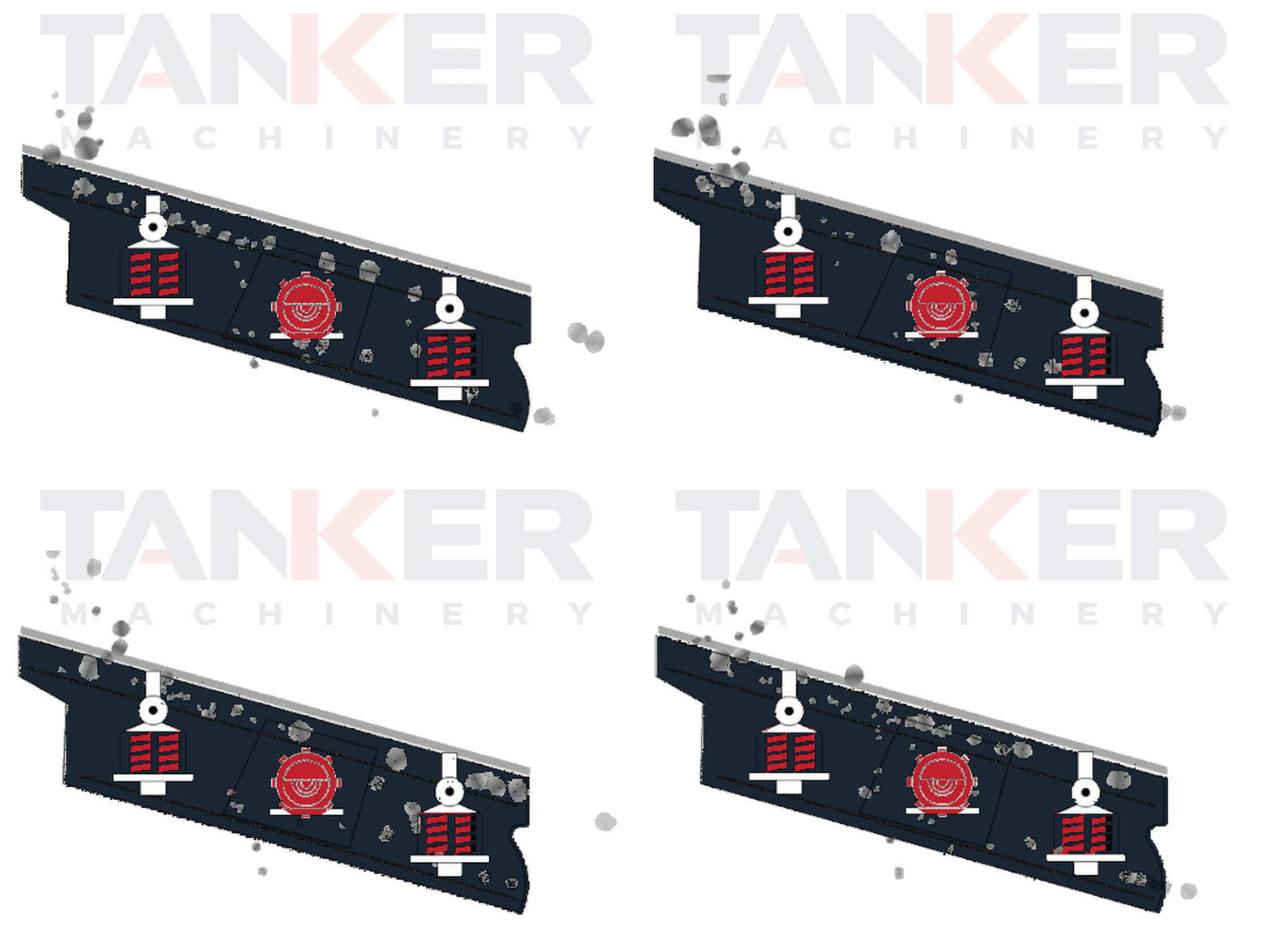
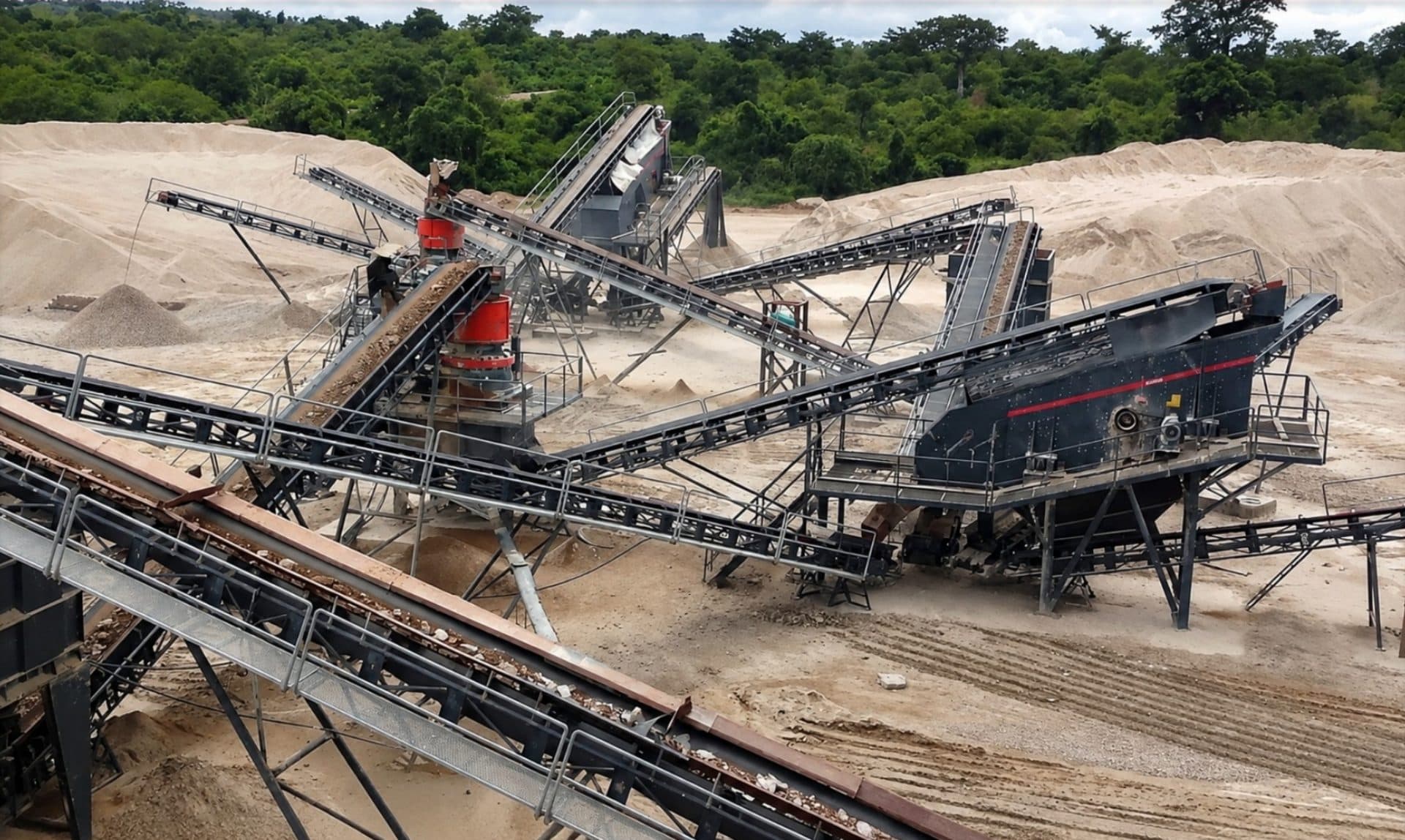
A vibrating screen separates material in a crushing and screening plant into specified size fractions. It does not crush the rock. Instead, controlled motion conveys particles across an apertured surface, loosens the bed and gives smaller particles repeated opportunities to reach and pass through the openings. The result depends on more than aperture size: motion, feed distribution, deck angle, moisture and bed depth all matter.
In short: an exciter gives the screen box a controlled vibrating motion. Material spreads across the deck and stratifies: smaller particles move toward the screening surface and pass through, while larger particles remain above and travel to the discharge end. A multi-deck screen repeats this process at different aperture sizes, producing several fractions from one feed stream.
What does a vibrating screen actually separate?
Material that passes through the openings is the undersize. Material retained on the deck is the oversize. Not every particle smaller than an aperture passes immediately; it must first reach the surface and approach an opening in a suitable orientation. That is why bed stratification and sufficient travel time are fundamental to screening.
Main components of a vibrating screen
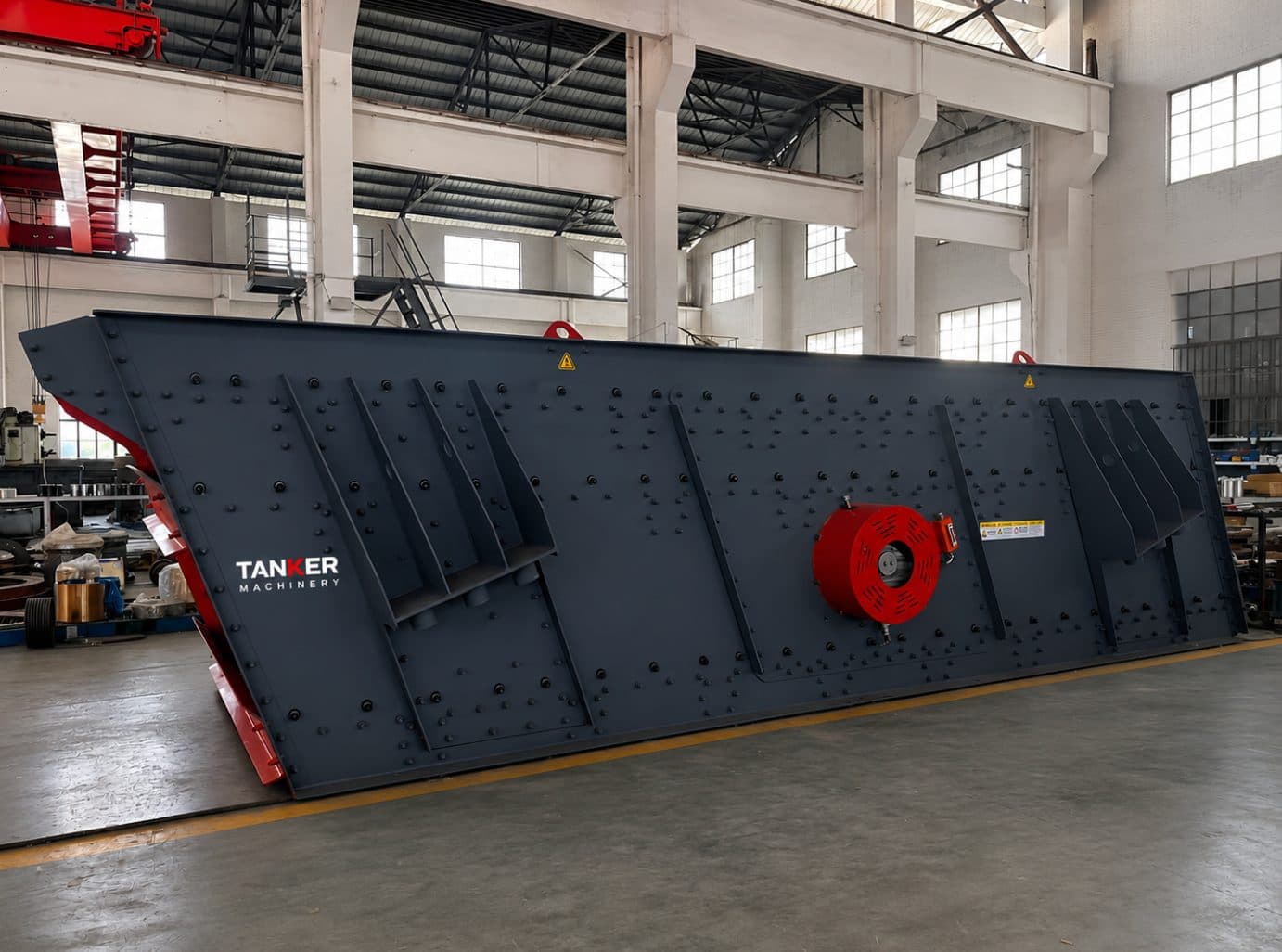
Screen box: the main vibrating structure that supports the screening media and material load.
Exciter or vibrator: uses unbalanced masses to generate circular, linear or elliptical motion.
Screening media: woven wire, perforated plate, rubber or polyurethane panels; the aperture establishes the nominal separation size.
Suspension springs: isolate the moving box from the support frame and limit the transmission of dynamic forces to the foundation.
Drive: the electric motor, belts, shafts and couplings power the exciter.
Feed box and discharge chutes: distribute feed across the width and direct the separated products to their next process stages.
Vibrating screen working principle: 6 steps
Feed enters the screen. Material lands in the feed box. Even distribution across the full width makes better use of the available screening area.
The exciter generates motion. The motor rotates the exciter. Unbalanced mass creates a periodic force that moves the screen box along its designed path and stroke.
The bed loosens and stratifies. Motion reduces internal friction. Coarser particles tend to rise while finer particles migrate toward the deck.
Fines pass through. Particles that reach the surface and are smaller than the aperture pass downward. Larger particles remain on top.
The retained bed travels forward. The direction of throw and deck inclination convey material toward discharge. On an inclined circular-motion screen, gravity is an important part of this transport.
Products leave separately. Each deck removes an undersize stream; the final oversize leaves from the end of the screen.
Circular, linear and elliptical motion compared
Motion | Typical arrangement | How material moves | Common fit |
|---|---|---|---|
Circular | Inclined deck | Vibration lifts and loosens the bed; slope and gravity move it forward. | Coarse and intermediate aggregate screening in quarries. |
Linear | Horizontal or shallow incline | Counter-rotating exciters create a directed resultant force. | Controlled conveying and finer classification. |
Elliptical | Often horizontal | Aggressive movement in two directions can accelerate stratification. | Specialized duties involving difficult, moist or flaky feeds. |
Tanker’s YK circular vibrating screen combines an inclined deck with circular motion and gravity. The ZK linear vibrating screen uses directed linear motion to convey the bed. Selection should be based on the material, moisture, feed size, required products and throughput—not on motion type alone.
What controls screening performance?
Feed distribution: a stream concentrated on one side overloads part of the deck, wastes open area and causes uneven wear.
Bed depth and feed rate: if the bed is too deep, fines cannot reach the openings in time; too little feed leaves useful capacity unused.
Stroke, frequency and throw angle: together they determine particle lift, travel speed and retention time. Change them only within the instructions for the exact model.
Deck inclination: a steeper deck normally speeds the material, but may reduce the available screening time.
Media and open area: aperture shape, percentage of open area, tension and wear condition directly influence both capacity and accuracy.
Moisture and particle shape: damp fines may blind the openings, while flat or elongated particles can peg in them.
Common problems and what to inspect
Symptom | Possible causes | Inspection focus |
|---|---|---|
Too many fines in the oversize | Excess feed, a deep bed, blinded apertures or unsuitable motion | Feed rate, media condition, stroke and deck angle |
Media wears rapidly on one side | Uneven feed distribution or excessive drop height | Feed-chute alignment and internal deflectors |
Support structure vibrates strongly | Damaged springs, loose fasteners or insufficient structural stiffness | Springs, bolts, foundation and resonance risk |
Bearings run hot or become noisy | Lubrication, alignment, overload or component wear | Temperature, lubricant specification and clearances |
Capacity is unstable | Feed rate or moisture varies | Incoming flow, material condition and bed profile |
Do not change exciter speed or counterweight position by guesswork. An unsuitable setting can impose excessive dynamic loads on bearings, springs, the screen box and its support structure. Adjustments must follow the manual for the exact model and, where appropriate, measured vibration data.
Frequently asked questions
Does a vibrating screen crush material?
No. It separates particles by size. Size reduction is performed by a crusher before or within another stage of the circuit.
What is the difference between undersize and oversize?
Undersize is the smaller product that passes through the apertures. Oversize is retained on the surface and leaves from the end of the deck.
Does increasing vibration speed always improve screening?
No. Speed, stroke and throw angle work as a system. Moving outside the designed operating range can reduce accuracy or damage the equipment.
Can wet material be screened?
Yes, but moisture increases the risk of adhesion and blinding. Suitable media, spray bars or a purpose-designed wet-screening arrangement may be required.
How many products can a two-deck screen make?
In a conventional arrangement, two decks can normally produce three size streams; three decks can produce four.
What information is needed to select a vibrating screen?
Provide the material, maximum feed size, moisture, required product fractions, hourly throughput, dry or wet process and available installation space.
Tanker’s specialists can use this information to select the motion, deck count, screening media and appropriate position in the production line.